Belief in Allah is not merely a theoretical affirmation for human beings; it is a profound existential necessity and a spiritual need. The Noble Qur’an directs human attention to numerous signs that support this belief. The order observed in the universe; the harmony and balance among beings (Ghashiyah, 88:17–20), the coherent and interrelated functioning of cosmic systems (Mulk, 67:30), the conscientious and intuitive inclination present within the inner world of the human being (Rum, 30:30), and the line of inner (anfusi) and outer (afaqi) contemplation extending from the microcosm to the macrocosm (Al-i ‘Imran, 3:191) stand out as fundamental epistemic grounds that lead the human being to a Creator. Appealing to the testimony of science, proceeding with the vision granted by revelation, and ultimately engaging in a profound inner selfreckoning emerge as the core dynamics of the path that leads to Allah. In this context, the concept of uluhiyyah expresses Allah’s absolute dominion and sovereignty over the universe. Allah exercises this sovereignty through His attributes such as knowledge, creation, will, and speech. Uluhiyyah provides an ontological and epistemological framework that explains the relationship between the Divine Essence and the cosmos. The concept of rububiyyah refers to Allah’s acts of creating beings, providing sustenance, protecting, and overseeing them. The concept of wahdaniyyah, which must be considered alongside uluhiyyah and rububiyyah, expresses the oneness of Allah and constitutes an essential condition for a true conception of the Divine. Without the notion of wahdaniyyah, a complete understanding of deity is not possible. Polytheistic approaches diminish the concept of deity from its rightful ontological position, and for this reason, such views are characterized as shirk in Islamic thought.
The Qur’an explicitly states that polytheism is incompatible with the order of the universe: “Had there been other gods besides Allah in the heavens or the earth, both ‘realms’ would have surely been corrupted.” (Anbiya, 21:22). This verse demonstrates that the belief in multiple deities at a metaphysical level would necessarily produce chaos in the cosmic order. The Qur’anic expression of bringing forth from darkness into light also serves as a striking depiction of the transition from chaos to cosmos. The universe is not without purpose or order; rather, it operates within a system governed by unchanging divine laws known as sunnatullah. Numerous phenomena, from the structure of the atmosphere to the layered heavens, and from the material universe to the multiplicity of cosmic systems, have been interpreted throughout history in light of both the tafsir tradition and scientific findings. Figures such as Fakhr alDin al-Razi, Molla Jami, Aristotle, and Ptolemy have shaped these cosmogonic discussions; at the same time, astronomers like Eratosthenes and Hipparchus contributed to the evolving understanding of the structure of the universe. With the advancement of modern science, the idea that the cosmos operates according to a systematic unity and set of laws has become even more firmly established. When the manner in which the system operates is taken into account, it becomes evident that the universe could not have come into existence on its own; therefore, it necessarily requires a Creator. That Creator is Allah. If one were to claim that the universe was brought into existence by something other than Allah, it would necessitate belief in an endless chain of creators. Such a belief leads to an infinite regress—a vicious circle with no resolution. (Topaloglu, Ateizm ve Eleştirisi, p. 94.) In Islamic thought, the existence of Allah is established through the testimony of cosmic signs (ayat kawniyyah) and through the arguments presented in the Qur’an, including the proofs from origination (huduth), invention (ikhtira), providence (inayah), and order (nizam). Even the formation of proteins within a living cell reveals an extraordinary level of mathematical and biochemical precision. The existence of billions of species, plants, oceans, celestial bodies, and the intricate structure of the human mind render the claim of coincidence intellectually indefensible (Karliga, Nicin Allah’a Inaniyoruz?, 4/22).
There is nothing more natural than a system of such immense complexity and scope having a conscious planner behind it. The Qur’an affirms that within human creation and within their very souls lie signs pointing to the existence of Allah. Nature is one of the most fundamental realms of revelation, conveying knowledge about the Creator. Allah has made all beings in the universe signs (ayah) and symbols, and He has endowed human beings with the intellect capable of reading, interpreting, and transcending these signs. This relationship between the human being and nature is made possible by the meaning ascribed to both. This semantic coherence must be reexamined, particularly by younger generations, when faced with modern ideologies such as atheism and deism.
The universe, as a whole, points to the absolute oneness of Allah. While secular tendencies portray the world as an ontologically deficient and flawed realm, Islamic thought maintains that the world has been created in the most perfect manner among all possible worlds. The Qur’an affirms this truth with the verse: “You will never see any imperfection in the creation of the Most Compassionate.” (Mulk, 67:3) The introspective (anfusi) and external (afaqi) signs complement one another on both micro and macro levels, forming evidence for the existence of Allah. The continuity of this order clearly demonstrates that the universe is governed with wisdom and will by a single deity. The Qur’an supports this perspective with numerous verses that emphasize the importance of contemplating the universe (Ghashiyah, 88:17–19; Ankabut, 29:20; Nahl, 16:66; Dhariyat, 51:21).
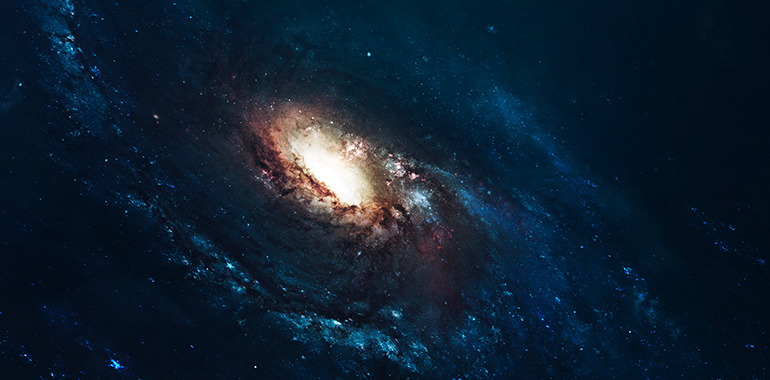
It becomes clearly evident from an objective standpoint that the universe did not come into existence by chance. The precise orbits of the planets, the balanced structure of the ecosystem, the orderly cycle of the seasons, and the Earth’s ideal distance from the Sun all point to the presence of fine-tuning. This system requires a level of intricate planning that even the most advanced technologies cannot replicate. Such a level of design naturally points to a Creator endowed with infinite knowledge and power. The Qur’an’s emphasis on the cycle of life (Nur, 24:43) draws attention to the continuity of this order.
Science still has vast realms of the universe left to discover. Yet with each discovery, rather than negating the power of Allah, His might becomes even more apparent. The cosmic imagery presented in Surah al-Nazi‘at, from the creation of the heavens to the ordering of the earth (Nazi‘at, 79:27–33), draws human attention both to the vastness of outer space and the intricate balance on Earth. The Qur’an employs a rich cosmological language through terms such as seven heavens, kawkab (star), misbah (star), takwir (wrapping), tibaq (layers), and samk (structure)— each pointing to different dimensions of the universe.
The mechanistic conception of the universe that emerged in Western thought after the Enlightenment presented religion and science as opposing realms. Influenced by figures such as Auguste Comte, J. Stuart Mill, and Herbert Spencer, atheistic and deistic discourses became widespread (Oguk, Yeni Ateistlerin Yanilgilari, pp. 70–71). Today, this perspective is being reproduced through Darwinian evolution and natural selection (Dawkins, The God Delusion, pp. 112–113). Approaches that frame certain biological traits in humans as flaws overlook the holistic and purposeful design of creation (Lents, Human Errors). Similarly, the claim that God cannot be empirically proven points to a significant flaw in reasoning (Krauss, A Universe from Nothing).
It must not be forgotten that scientists, too, are susceptible to error due to biases, societal conditioning, and conceptual limitations. The NOMA approach—NonOverlapping Magisteria— which advocates for the complete separation of science and religion (Strobel, Hani Tanri Olmuştu?, pp. 102–103), overlooks the dimension of meaning within the universe. Yet the universe possesses a depth of meaning that cannot be fully explained by the data provided through empirical science alone. Modern cosmology has revealed that an extraordinarily delicate balance among the four fundamental forces of nature is required for life to emerge. The formation of elements such as carbon, nitrogen, and oxygen depends on the internal structure of stars and the initial conditions of the universe. This fine tuning strongly supports a theistic explanation (Golshani, Theistic Science, pp. 215–216; Swinburne, p. 228).
In conclusion, the human being must observe phenomena, evaluate them through rational inference, and approach reason through revelation, and science through wisdom. Verses in the Qur’an, such as the Ratq–Fatq phenomenon (Anbiya, 21:30) in comparison with the Big Bang theory, the expansion of the heavens (Dhariyat 51:47), and the verse describing the Divine Throne (Kursi) encompassing the heavens and the earth (Baqarah 2:255), invite a renewed exploration of the relationship between religion and science. Likewise, reflections on the end of the universe within the context of eschatological imagery (Ibrahim, 14:48) deepen contemplation. All of this indicates that a theistic science, one that aligns with the grandeur of the cosmos, is possible, coherent, and also necessary.