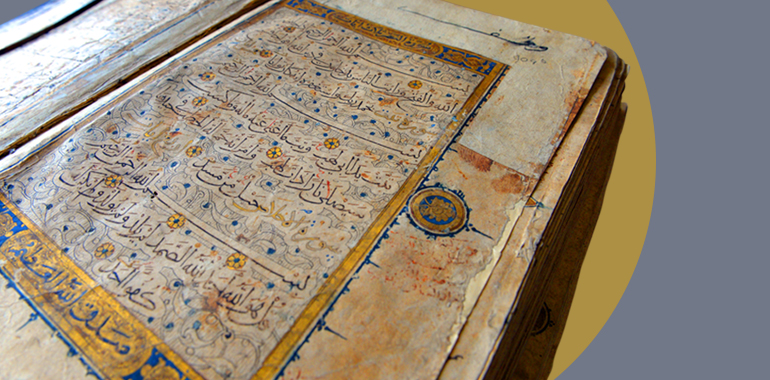
“The example of those who spend their wealth in the cause of Allah is that of a grain that sprouts into seven ears, each bearing one hundred grains. And Allah multiplies ‘the reward even more’ to whoever He wills. For Allah is All-Bountiful, All-Knowing.” (Baqarah, 2:261)
Allah the Almighty, in His wisdom, has created human beings in diverse forms. Just as the languages, colors, and cultures of societies differ from one another, so too do individuals vary in terms of their abilities and material means. In this context, it becomes evident that, as social beings, humans must live in coexistence with others in order to sustain their existence. Allah the Almighty has established a balance and order in the universe and has bestowed different resources and blessings upon various regions and geographies. As stated in the verse, “…We (alone) have distributed their (very) livelihood among them in this worldly life and raised some of them in rank above others so that some may employ others in service....” (al-Zukhruf, 43:32), this divine truth encompasses numerous instances of wisdom (Maturidi, Ta’wilat Ahl al-Sunnah, 9/162–163; Zamakhshari, al-Kashshaf, 4/248–249.). This truth also places a responsibility upon human beings. In order to maintain balance among people in the world and to ensure the continuation of peace and happiness, it is essential to keep alive the values of sharing, mutual assistance, generosity, and charitable giving (infaq). Given the reality that human beings will not be on the same level in every aspect of worldly life—some being wealthy while others are poor—it becomes obligatory that when the blessings Allah the Almighty bestows upon an individual, a society, or a region exceed their needs, this surplus must be transferred to those in need and shared with the less fortunate. Otherwise, social, cultural, and economic disparities will arise among people; these differences will give rise to various desires, and if these desires are not fulfilled, negative consequences such as anger, enmity, hatred, oppression, and war, which disrupt peace and happiness, may emerge (Kur’an Yolu, vol. 1, p. 419).
The Holy Qur’an contains numerous verses that encourage helping those in need, doing good, and engaging in acts of sharing. In addition, concepts such as infaq, zakat, and sadaqah are all directed toward promoting mutual assistance, encouraging generosity, and establishing a balance between the rich and the poor. Alongside the obligatory zakat that eligible Muslims are required to give, the Qur’an also advises believers to give sadaqah voluntarily at every opportunity and to spend in the way of Allah (infaq). Furthermore, the Qur’an points to how infaq should be carried out, offering us guidance in this regard and teaching us the ethics of charitable giving.
First and foremost, with the verse “and that each person will only have what they endeavored towards…” (Najm, 53:39), the Qur’an emphasizes the importance of a person’s effort and striving. However, it is also a reality that there are individuals who are either unable to work due to certain obstacles or, despite their efforts, are unable to succeed. In such cases, it becomes both a religious and moral responsibility for those who are able to extend a helping hand to those in need to offer assistance and to give in charity (tasadduq). The Qur’an also teaches that, in fulfilling this duty, one must act responsibly and observe certain principles. Accordingly, infaq and tasadduq performed with the intention of worship must be done solely for the sake of Allah’s pleasure, not to gain the approval or admiration of others. In this regard, Allah the Almighty presents the example of a garden that yields double produce after receiving abundant rain to describe those who spend in His cause sincerely (Baqarah, 2:265), thus pointing to the reward and blessings that come from giving in charity with pure intentions.
Another important matter to be observed in infaq is that acts of kindness must not be followed by reproach or hurtful behavior. Allah the Almighty warns us in this regard as well (Baqarah, 2:262). Indeed, such actions not only wound and humiliate the people in need, offending their dignity, but also nullify the reward and blessings of the good deed and assistance rendered. The Qur’an highlights that giving sadaqah in secret is more virtuous (Baqarah, 2:271), drawing attention to an important point: this protects the recipient from feeling embarrassed and prevents the giver from falling into the temptation of showing off. Another key principle in infaq is that what is given should be of good quality, not something undesirable. The Qur’anic counsel that we should not attempt to give in charity that which we ourselves would not accept except with reluctance (Baqarah, 2:267) teaches us an important principle of the ethics of infaq. One of the key points to be observed in this matter is to avoid wastefulness. Acting with the awareness that something surplus to our needs may be a necessity for someone else, and maintaining balance in our spending, just as in every other aspect of life, is a command from the Qur’an (Isra, 17:29). Just as miserliness does not befit a Muslim, neither does extravagance, unnecessary spending, or squandering resources.
Another important point related to this matter is that infaq, acts of goodness and charity, and the giving of sadaqah bring about great benefits both in this world and the hereafter (Kur’an Yolu, vol. 1, pp. 418–419.). Indeed, Allah the Almighty states that the good deeds we perform are ultimately for our own benefit and gives glad tidings that their reward will be given in full (Baqarah, 2:272, 274). While the reward for most good deeds is generally tenfold, the verse referenced above (Baqarah, 2:261) states that the reward for spending in the way of Allah is seven hundredfold. This is profoundly significant glad tidings, highlighting the immense value and importance of this act of worship, and indicating that its reward will be multiplied many times over (Nasafi, Madarik al-Tanzil, 1/216–217; Kur’an Yolu, vol. 1, p. 420.). Although it may appear that giving sadaqah or performing good deeds reduces one’s wealth, the reality is quite the opposite. As stated in the Qur’an, Allah the Almighty increases and blesses the wealth of those who give in charity (Baqarah, 2:276). When we consider that spending in the way of Allah brings abundance and goodness to one’s earnings, serves as an expression of gratitude for the blessings granted to us, and, through sadaqah al-jariyah, becomes a means for our book of deeds to remain open continuously, it becomes clear that such acts cannot be measured by any material standard. As stated in the Qur’an, “You will never achieve righteousness until you donate some of what you cherish” (Al-i ‘Imran, 3:92), the beloved servants of Allah act with a sense of ithar, selfless altruism, by offering food to the poor, the orphan, and the captive even when they themselves are in need (Insan, 76:8). Moreover, they do so purely for the sake of Allah, without seeking any worldly benefit or return (Insan, 76:9). Undoubtedly, all of these acts become means for fostering social unity, solidarity, mutual support, and cohesion within the community.